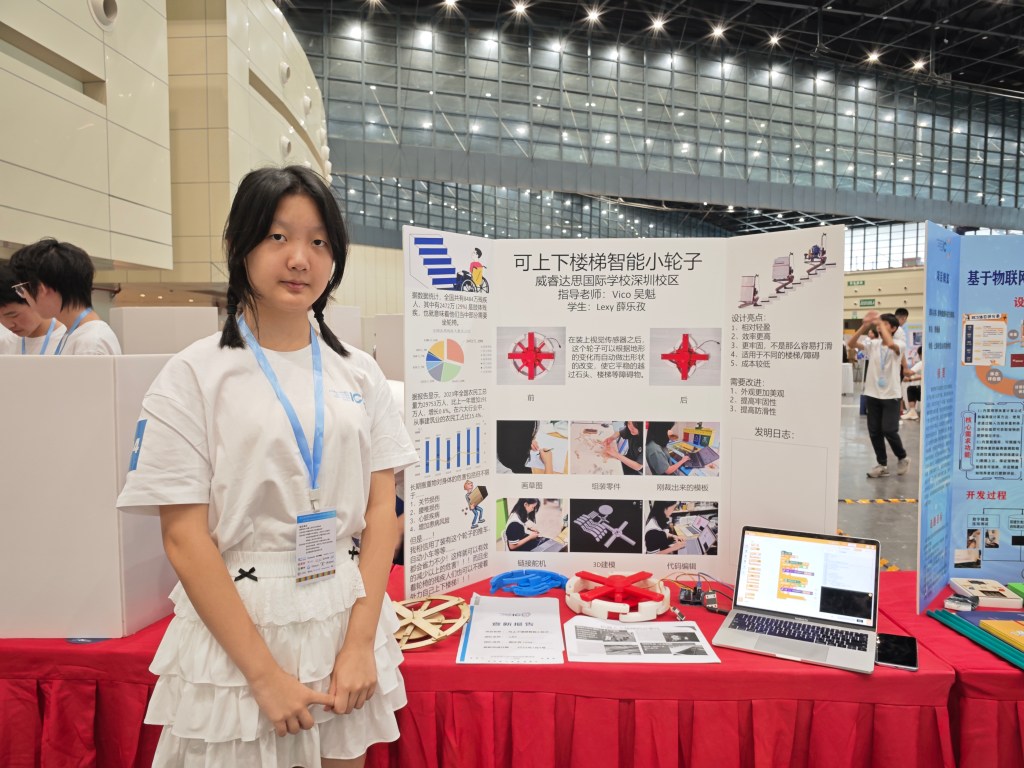
1. Elevator Pitch
Our innovation, the transformable wheel, is a groundbreaking development in the field of industrial transportation. It is designed to overcome the limitations of traditional wheels when faced with complex terrains such as stairs or uneven ground.
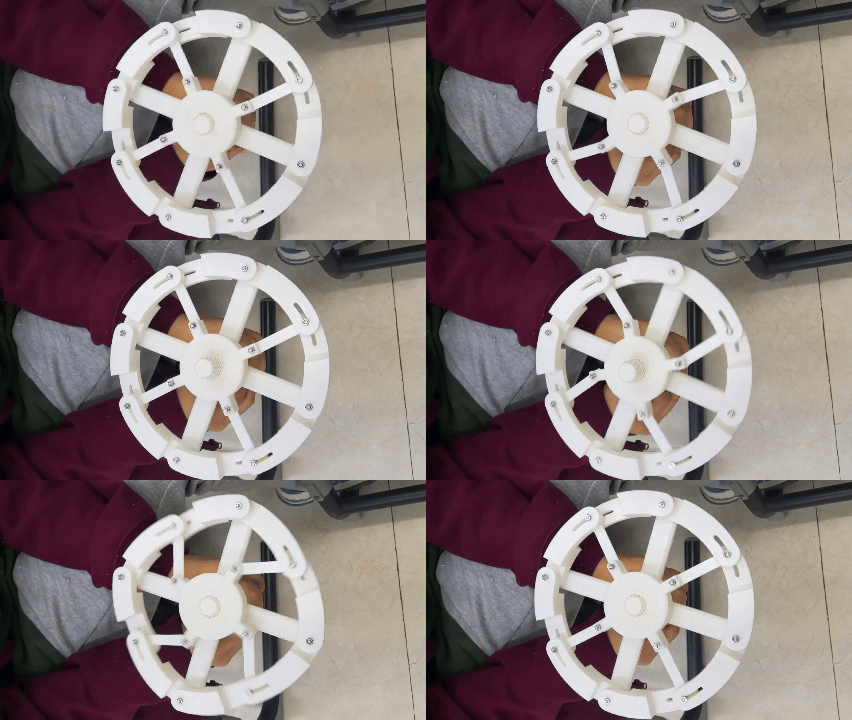
The core technology of our wheel involves a unique three-level gear system integrated into the axle, which allows the wheel to maintain its circular form on flat surfaces while providing the necessary articulation to climb stairs or traverse obstacles.
1)Design and Technology:
The design of the transformable wheel is both elegant and functional. It features a central axle with three distinct gear levels that engage with a turning table. This turning table is the heart of the innovation, controlling the wheel’s shape-shifting capabilities. When the vehicle is on flat ground, the wheel operates as a standard wheel, providing smooth and efficient movement.
However, when faced with stairs or uneven terrain, the turning table activates the gear system, allowing the wheel to adjust its angle and conform to the terrain.
2)New or Proprietary Aspects:
The three-level gear system on the axle is a novel approach that has not been seen in traditional wheel designs. This system, along with the turning table mechanism, is proprietary to our innovation. We have invested significant research and development to ensure that these components work seamlessly together, providing a reliable and durable solution for various transportation challenges.
3)Meeting Needs and Resolving Pain Points:
The transformable wheel meets the need for a versatile transportation solution that can adapt to different environments. It resolves the pain point of traditional vehicles that are unable to navigate stairs or rough terrain, which is a common issue in industrial and construction settings. By providing a wheel that can change its shape, we are enabling vehicles to access areas that were previously inaccessible, thus increasing operational efficiency and reducing the need for manual labor.
4)Impact on Users and Humankind:
The impact of our innovation is twofold. For individual users, it offers a more efficient and safe way to transport materials in challenging environments. For humankind, it represents a step forward in transportation technology, potentially leading to new applications in various fields such as rescue operations, agriculture, and even space exploration. Quantitatively, we expect to see a reduction in transportation-related accidents and an increase in the speed of material handling. Qualitatively, it will empower individuals and industries to tackle tasks that were once deemed too difficult or dangerous.
5)Protection and Value of Proprietary Aspects:
To protect the proprietary aspects of our innovation, we are pursuing a patent for the three-level gear system and the turning table mechanism. These patents will legally safeguard our intellectual property and prevent unauthorized replication. Additionally, we plan to maintain certain aspects as trade secrets, further enhancing the security of our technology.
By establishing a strong legal framework and controlling the dissemination of our technology, we ensure that our innovation remains competitive and valuable in the market.In summary, the transformable wheel is an innovation that addresses a significant gap in the market for industrial transportation. Its unique design and technology provide a solution to complex terrain navigation, offering a safe and efficient alternative to traditional wheel systems.
The proprietary nature of our technology, combined with strategic legal protections, positions our innovation as a leader in the field, with the potential to create a lasting impact on how materials are transported in challenging environments.
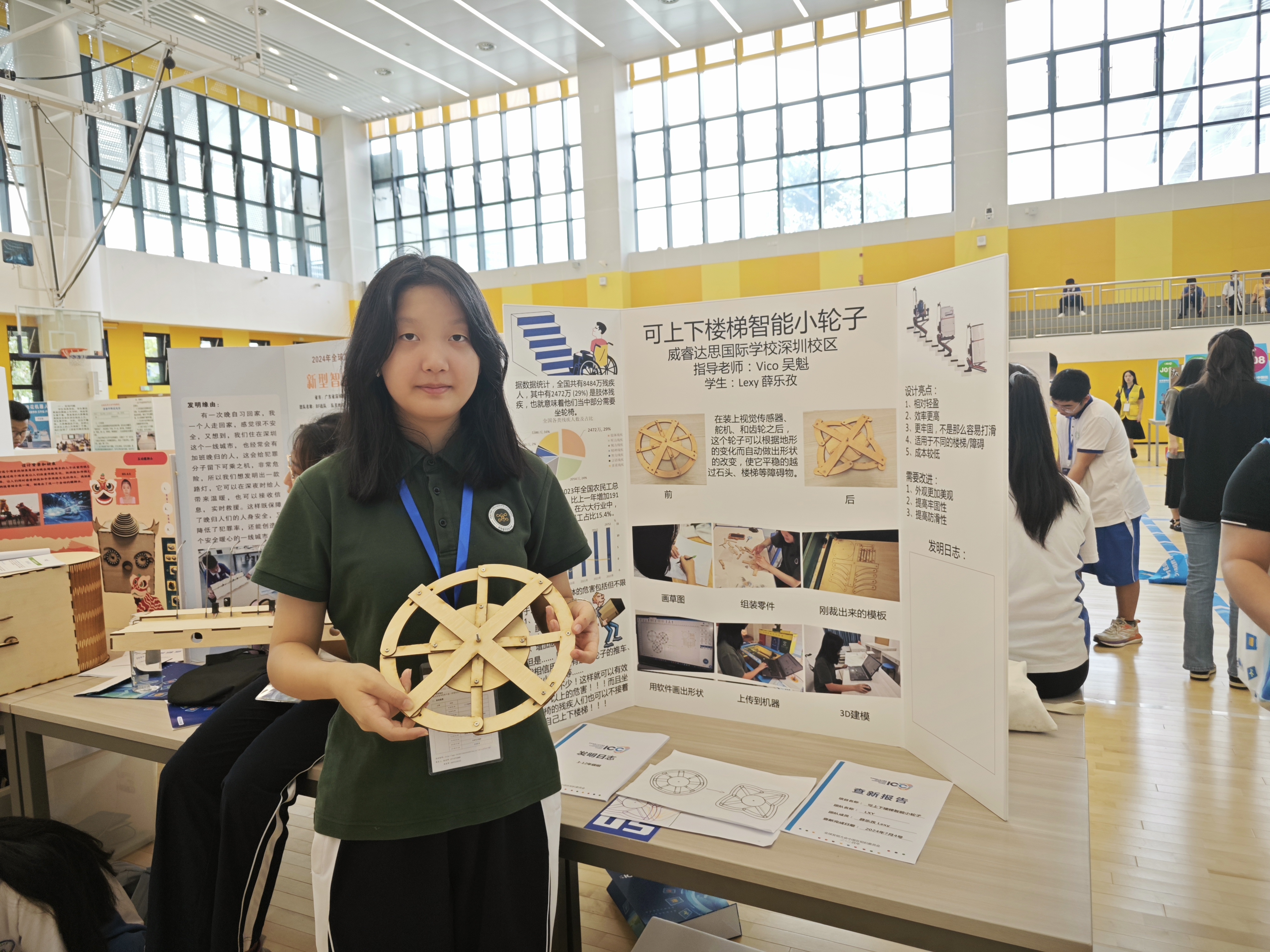
2. Team
Our team formed through a shared vision to revolutionize industrial transportation. Each member brings unique skills: the lead engineer specializes in mechanical design, the project manager excels in logistics and operations, and the other two members contribute significantly in aesthetic vehicle design and material assembly.

We were motivated by the industry’s need for a versatile, efficient, and safe material handling solution. Our collective experience in engineering, logistics, and finance provides a strong foundation for developing and implementing the transformable wheel innovation.
3.Opportunity
1)Efficient Handling of Heavy Loads:
The innovation is designed to effortlessly transport heavy industrial materials. By doing so, it significantly enhances efficiency and reduces the labor costs. This is particularly beneficial in environments where heavy lifting is a routine part of operations, such as warehouses, construction sites, or manufacturing facilities.
2)Adaptability to Varied Terrains:
The transformable wheel’s ability to adjust its angle through the use of servos allows it to navigate a wide range of terrains, including stairs, which are a common challenge for traditional wheeled vehicles. This adaptability ensures that the vehicle can operate in diverse settings without the need for multiple types of equipment, thus increasing its utility.
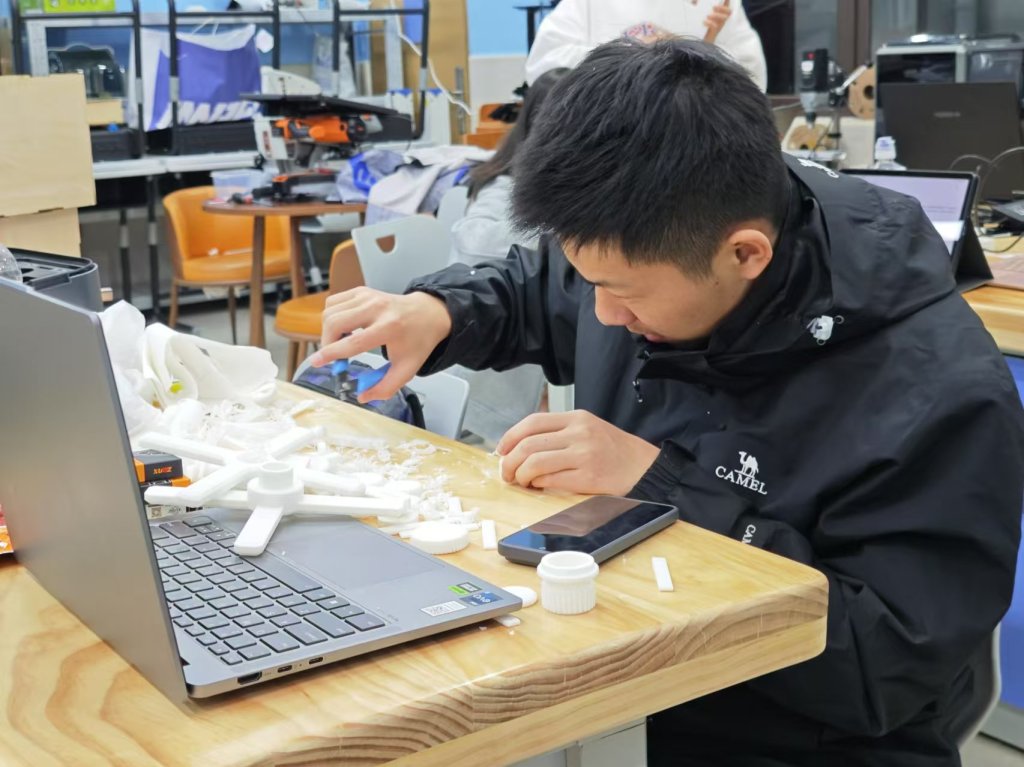
3)Cost-Effectiveness through 3D Printing:
The use of 3D printing technology in the manufacturing process of the transformable wheel leads to a significant reduction in production costs. This not only makes the innovation more accessible to a broader range of businesses but also supports the principles of lean manufacturing and sustainability. The lower cost of production can also translate into a quicker return on investment for companies that adopt this technology.
4)Innovation in Mobility Solutions:
The transformable wheel represents a new approach to mobility, offering a versatile solution that can be adapted to specific needs. This innovation could potentially revolutionize the way heavy materials are transported, making the process safer, more efficient, and more cost-effective.
5)Potential for Further Development:
The concept of a transformable wheel opens up possibilities for further technological advancements. It could inspire the development of additional features or be integrated into larger systems that enhance the capabilities of industrial vehicles.In summary, the transformable wheel innovation addresses the pain points of efficiency, adaptability, and cost in industrial transportation, while also offering a foundation for future technological developments in the field.
4.Key Metrics:??
Tracking success with metrics such as load capacity, stair-climbing efficiency, and durability under heavy loads.
5.Validation/Progress:
1)Prototype Development:
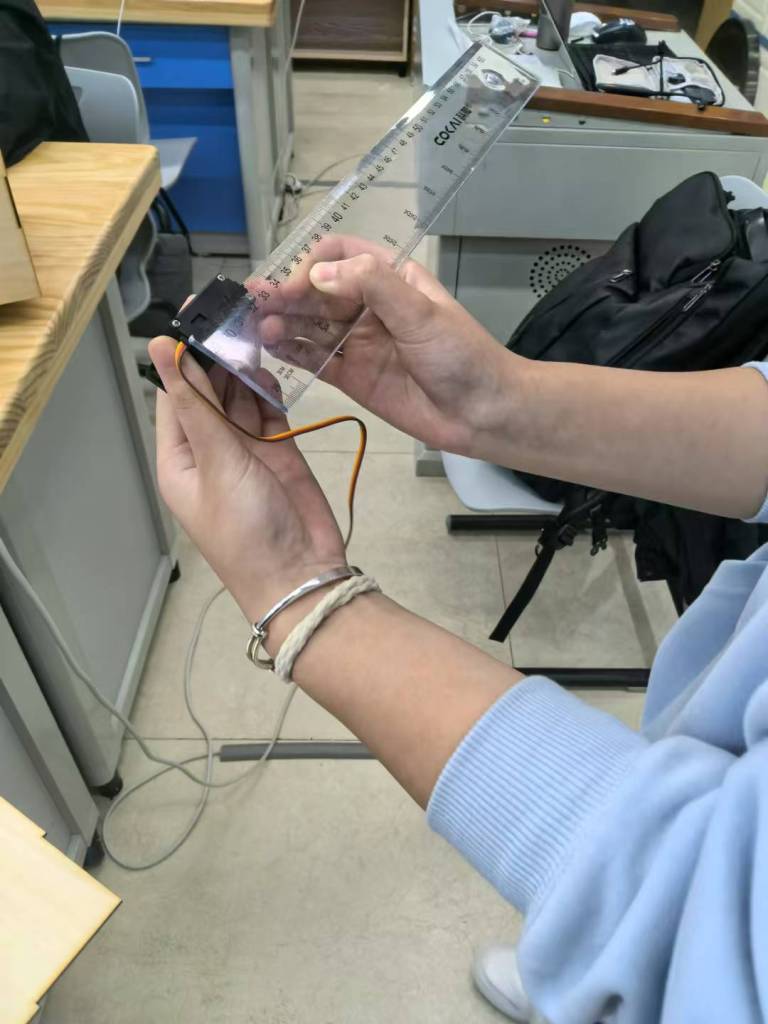
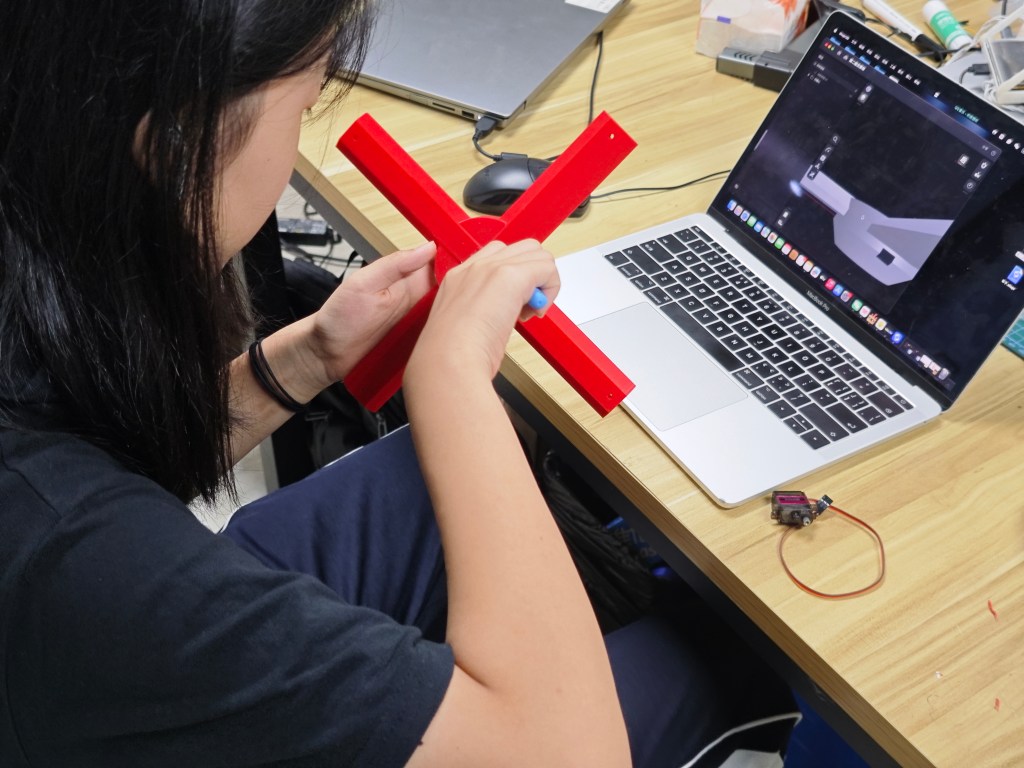
Following the design phase, a series of prototypes were developed using 3D printing technology. This allowed for quick iteration and testing of different design aspects, such as the wheel’s structural integrity, the mechanism for angle adjustment, and the integration of servos for control. The prototypes were made from a variety of materials to test their performance and wear resistance.

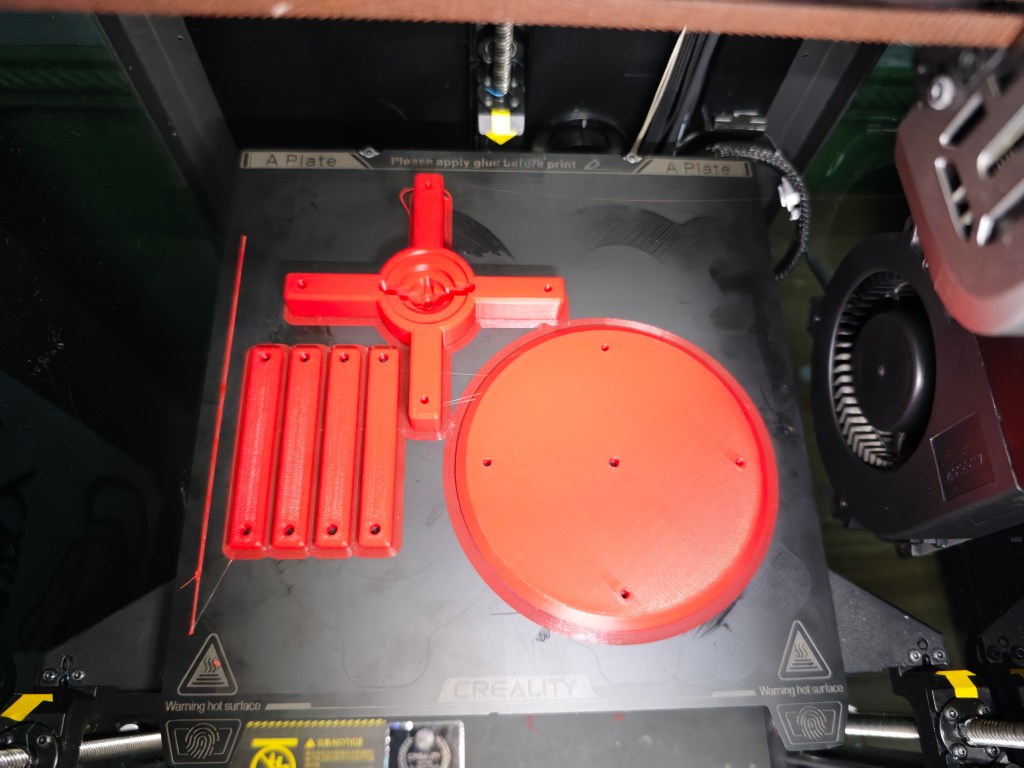
2)Laboratory Testing:
The prototypes underwent rigorous laboratory testing to validate their performance. This included testing the wheel’s ability to handle heavy loads, its maneuverability on different terrains, and the reliability of the angle adjustment mechanism. Data was collected on load capacity, maneuverability, and the lifespan of the components under stress.
3)Field Trials:
Beyond the controlled environment of the lab, the prototypes were tested in real-world scenarios that simulated industrial settings. This included navigating over stairs, uneven ground, and carrying heavy loads. The field trials provided valuable insights into the practical challenges and limitations of the design, which were then used to further refine the prototypes.
4)Feedback and Iteration:
Throughout the development process, feedback was gathered from potential users, industry experts, and the development team. This feedback was critical in identifying areas for improvement and in guiding the next stages of development. The team iterated on the design, incorporating the feedback to enhance functionality, reliability, and user-friendliness.
5)Technology Integration:
The team also focused on integrating the latest technological advancements into the wheel’s design. This included the use of advanced materials for the wheel’s construction, the implementation of smart sensors for load monitoring, and the development of a user-friendly control system for the angle adjustment.
6)Progress Made:
The team has made significant progress in developing the innovation. The current prototype is capable of handling loads up to several hundred kilograms, adjusting angles on command, and navigating stairs and uneven terrain with ease. The control system is being refined to ensure smooth and precise operation, and the team is exploring options for scaling up production to meet industrial demands.
In summary, the validation and development of the transformable wheel have been a comprehensive process involving design, prototyping, testing, and iteration. The team has made substantial progress, and the innovation is now at a stage where it shows promise for practical application in various industrial settings.

6.Market
The target market for our transformable wheel innovation encompasses industrial manufacturers, construction companies, and logistics firms. These customers are in constant need of reliable and efficient methods to transport heavy materials, particularly in environments that present challenges such as uneven terrains and obstacles like stairs.
Our innovation is designed to address these pain points by increasing operational efficiency, reducing labor costs, and enhancing safety standards, which are critical factors for our customers.
The market opportunity is significant, with the global industrial machinery market. This growth is driven by the increasing demand for automation and efficiency in industrial processes.
Our innovation complements existing machinery and sets a new standard in material handling, filling a gap in the market for a versatile wheel system capable of navigating diverse terrains.In this market, the buyers and payers are often the operations managers or procurement departments within these companies. They are looking for solutions that can improve their bottom line by reducing costs and increasing productivity.
Our innovation offers a competitive edge by providing a unique value proposition that is difficult to replicate, ensuring a strong market position.The industry ecosystem is dynamic, with a constant push for innovation and efficiency.
Our transformable wheel is poised to become a key component in this ecosystem, integrating with existing systems and offering a scalable solution for a wide range of applications.
By focusing on these target segments, we aim to capture a substantial share of the market and drive the adoption of our technology across various industries.
7.Competition
High Level Concept:Innovate Transport:Climb,Carry,Conquer.
1)Innovation Description:
The Transforming Wheel is a new tool for moving heavy stuff in factories or on sites. It has wheels that can change their angle to go up stairs or over bumps. This makes it easy to carry heavy things without a lot of people or big machines.
Our innovation targets industrial sectors such as manufacturing, construction, and logistics. These are businesses that frequently handle heavy materials and require efficient, reliable transportation solutions that can adapt to various terrains, including stairs and uneven floors.
2)Customers:
We target industrial manufacturers,construction firms,and logistics companies in need of robust,versatile transportation solutions.
3)Business Potential:
With a growing market for efficient industrial transport,TMW offers a competitive edge.Its unique design has potential in agriculture,mining,and robotics,promising significant growth and partnership opportunities.
4)Competition:
The TMW competes with traditional rigid wheels,tracked vehicles,and emerging autonomous transport systems.While rigid wheels are common,they are not as adaptable.Tracked vehicles can handle rough terrain but are less maneuverable and more expensive to maintain.Autonomous systems are new and may lack the reliability of TMW.
5)Advantages:
• Versatility:One vehicle for all terrains,reducing the need for multiple machines.
• Efficiency:Faster operations with no need to switch equipment.
• Safety:Minimizes risk by avoiding multiple handling of heavy loads.
6)Disadvantages:
• Complexity:May require specialized maintenance.
• Cost:Initial investment is higher due to advanced technology.
• Durability:Potential for increased wear and tear.
7)Positioning:
Positioned as a high-end solution for industries needing flexible,efficient transport.Ideal for manufacturing,construction,and logistics,where adaptability is key.
8.Go-To-Market
Our innovation’s intricate structure and ingenious design make it challenging to replicate. The complexity of the mechanical components and the precision required in assembly serve as significant barriers to imitation, ensuring a unique market position.
We will market our innovation through industry trade shows, online marketing, and direct sales to key industrial clients. Delivery will be managed through our established logistics network, ensuring efficient and timely distribution to customers worldwide.
1)Attracting and Selling:
We’ll use online ads,social media,and industry events to show how the Transforming Wheel makes moving heavy stuff easier.We’ll also reach out directly to businesses that could use our product.
2)Initial Customers:
Our first customers will be companies that work with heavy materials,like factories and construction sites.They have a lot of heavy things to move and could really use our wheel.
3)Selling Strategies:
We think it’s best to sell directly to businesses and also work with other companies as partners.This way,we can make sure our customers are happy and also get our product out there faster.
9.Business Model:
The key revenues will come from the sale of the transformable wheel systems, licensing of our technology, and providing maintenance and support services. Our costs include research and development, manufacturing, marketing, and customer support. To deliver one product unit, we will incur costs for materials, labor, and quality assurance. Our pricing strategy will be competitive, reflecting the value of increased efficiency and safety our innovation offers.
We aim to balance affordability with a premium for the advanced technology. The business model is designed to be scalable, allowing us to expand production and distribution as demand grows. We will also explore partnerships with industrial equipment manufacturers to integrate our wheel systems into their products, further expanding our market reach.
10.Fundraising Strategy
1)Startup Funds:
We need initial capital for product development and operational costs like hiring and marketing.This will be spent on creating prototypes and setting up our business.
2)Development and Rollout Cost:
It will cost around500,000 to develop the Transforming Wheel and get it ready for customers.
3)Funding Sources:
We plan to get money from venture capitalists,who can give us a lot of money and help us grow,and angel investors,who can offer advice and connections.We might also look for government grants to support our innovative product.Each of these sources can help us in different ways to make our business successful.
4)Early Adopters:
Our first customers will be forward-thinking companies in manufacturing and construction that value innovation and are eager to enhance efficiency. They are likely to be mid-sized firms with the flexibility to integrate new technologies and the resources to invest in advanced equipment.
11.Cost Structure:
Our most significant costs include R&D for continuous improvement, the procurement of high-quality materials for durability, and the initial investment in manufacturing equipment. We also allocate for marketing to reach our target audience and customer support for post-sale services.
12.Revenue Streams:
We will generate revenue through the sale of our transformable wheel systems, licensing our proprietary technology, and offering maintenance contracts. Additionally, we plan to create a service model for on-demand repairs and customizations, ensuring a steady income stream.
Relevant Information:
Project Name:
可上下楼梯智能小轮子The Transformable Wheel
Member:
薛乐孜 XUE LEZI
陈嘉铭 CHEN JIAMING
何凯璇 HEKAIXUAN
贺然 He Ran
Advisor:
吴魁WU KUI
School:
威睿达思国际学校深圳校区 Veritas Collegiate Academy
 ZhuoYu Maker Education
留下评论